
Web Development
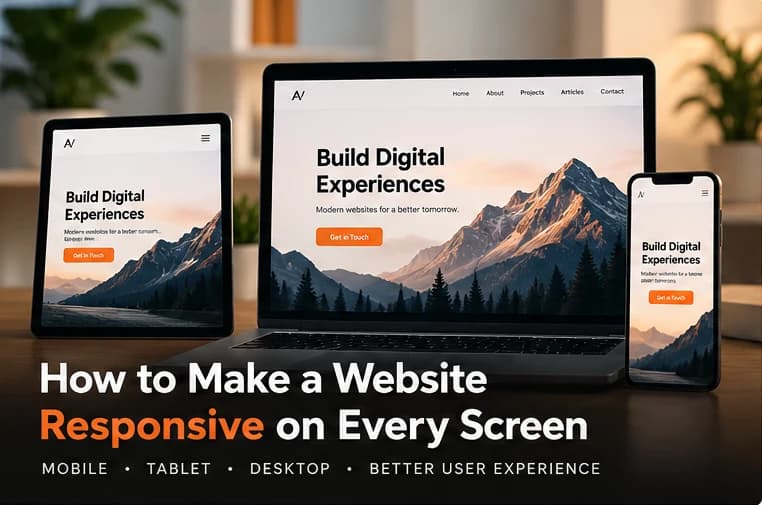
How to Make a Website Responsive on Every Screen
Learn how to build responsive websites for mobile, tablet, and desktop.
 Athul Vinayak S.M. · 11 min read



Business & Web Development
Why a professional website helps small businesses earn trust, be found online and win more customers.

Running a small business involves more than offering a good product or service. Potential customers also need to discover the business, understand what it offers, and feel confident enough to make contact.
Many customers search online before visiting a shop, contacting a service provider, or making a purchase. They may want to check opening hours, compare services, view photographs, read frequently asked questions, or find contact information.
If a business has no website, customers may have to rely entirely on social media profiles, directory listings, or information shared by other people.
A professional website provides a central place where a business can present accurate information, explain its value, and guide visitors toward taking action.
In this article, we will explore why a website matters for small businesses, what features are worth prioritizing, and how to approach website development without spending money on unnecessary complexity.
Trust is an important part of customer decision-making.
When people discover a business for the first time, they may want to confirm that it is legitimate, understand its services, and find evidence that it can meet their needs.
A professional website can provide that information in a structured and accessible way.
For example, a physiotherapy clinic might include its services, practitioner qualifications, location, appointment process, and contact information. A photography business could display selected work, explain its packages, and provide a straightforward enquiry form.
The design should support the business's credibility rather than distract from it.
Useful trust-building elements include:
A website cannot guarantee that customers will trust a business. However, clear information and a consistent professional presentation can reduce uncertainty and make it easier for potential customers to evaluate the business.
A website creates an opportunity for a business to appear in search results when people look for relevant products or services.
For example, someone searching for a local photographer, repair service, or rehabilitation clinic may discover a business through a relevant page on its website.
Search engine optimization, commonly called SEO, helps search engines understand a website and helps people find useful content.
If a business offers several distinct services, it may be useful to create a dedicated page for each major service.
A local web development agency, for example, could create pages for business websites, e-commerce development, website maintenance, and landing pages.
Each page should explain the service clearly, answer common questions, and provide a relevant next step.
Avoid creating dozens of nearly identical pages simply to target different keywords. Each page should provide genuine value.
Business name, address, phone number, and opening hours should be accurate wherever they appear online.
For businesses that serve customers at a physical location or within a defined service area, a well-maintained Google Business Profile can complement the website.
A website and business profile serve different purposes, but together they can make it easier for customers to find reliable information.
Social media platforms can be useful for updates, photographs, announcements, and customer engagement. However, businesses often have limited control over how their content is displayed and discovered on those platforms.
A website gives the business more control over its own presentation.
Visitors can find essential information without having to scroll through unrelated posts.
A small business website might include:
The exact structure should reflect the business. A local restaurant may need menus and opening hours, while a freelance developer may need project examples, services, and an enquiry form.
Keep important information easy to find. Visitors should not have to search through several pages to discover the business's location or how to contact it.
A website should not merely describe a business. It should also help visitors take the next step.
Depending on the business, that action might be booking an appointment, requesting a quotation, calling a shop, making a purchase, or sending an enquiry.
Clear calls to action can help visitors understand what to do next.
Examples include:
The most appropriate action depends on the customer's needs and the business's operating process.
A contact page should contain accurate contact information and a simple way to get in touch.
For businesses that regularly communicate with customers through WhatsApp, a WhatsApp contact link may be useful. A booking form may be better for services that require a date, time, or specific customer details.
Do not force visitors to complete a long form if a simple enquiry will do.
Also explain what happens after someone submits a request. A brief message about response times can help set expectations, provided the business can meet them.
Customers may visit a website using a phone while travelling, comparing options, or standing outside a business.
If the website is difficult to navigate on a small screen, visitors may struggle to read the information or contact the business.
A mobile-friendly website should include:
Test the website at different screen sizes rather than assuming that a desktop layout will automatically work on mobile.
Performance matters too. Large images, unnecessary scripts, and slow third-party widgets can make a mobile website frustrating to use, particularly on slower connections.
A responsive, well-performing website helps customers access the same essential information regardless of their device.
A website allows a business to demonstrate what it offers rather than relying only on written descriptions.
A photography studio can display a gallery. A construction company can showcase completed projects. A restaurant can present its menu. A web developer can show examples of websites they have built.
Relevant images and project descriptions can help customers understand the quality and type of work they can expect.
For project galleries, include context where useful. Explain the problem, the service provided, and the outcome without making unsupported claims.
Use authentic photographs and obtain permission before publishing customer images, testimonials, or confidential project information.
Optimize images for loading speed and provide meaningful alternative text when images communicate important information.
A website can act as a central destination for marketing activities.
A business can link to relevant pages from social media posts, advertisements, email campaigns, printed materials, and business cards.
Instead of directing every visitor to a general profile, the business can send people to a page specifically designed for the service or offer they are interested in.
For example, an advertisement promoting website development could lead to a page explaining the service, showing relevant projects, and providing a quotation request form.
This creates a more focused experience.
Analytics tools can help businesses understand which pages attract visitors and which actions people take. However, analytics should be configured responsibly, with appropriate privacy disclosures and consent mechanisms where required.
A small business website does not have to include every feature from the beginning.
It can start with a simple set of pages and grow as the business develops.
An initial website might contain the home page, service information, a portfolio, and contact details. Later, the business might add online bookings, a product catalogue, customer resources, or an e-commerce system.
This gradual approach helps businesses prioritize useful features rather than investing in complicated functionality before it is needed.
A website can also support new services, different customer groups, and new marketing campaigns.
However, growth is not automatic. A website needs useful content, accurate information, maintenance, and a clear purpose. Businesses should review whether the website is helping customers and adjust it when necessary.
The cost of a business website depends on its size, design, functionality, content requirements, integrations, and ongoing maintenance needs.
A small informational website may need only a few well-designed pages. An online store may require product management, payment processing, shipping configuration, order notifications, and additional security considerations.
Before development begins, identify the most important business goals.
Ask questions such as:
The answers help determine which features are necessary and which can wait.
A professional website is not defined by how many animations or effects it contains. It is defined by how effectively it serves its users and supports the business.
A website needs maintenance after launch.
Depending on the platform and features, maintenance may include updating software dependencies, reviewing access permissions, renewing the domain, checking forms, testing backups, and monitoring security issues.
Use HTTPS and reputable hosting. Keep administrative access restricted to authorized people, use strong authentication, and avoid collecting sensitive information unless there is a genuine need.
Forms should be protected against spam, and personal information should be handled responsibly.
For a website built with a framework such as Next.js, maintenance may also involve reviewing dependency updates, checking build failures, and testing important routes after deployment.
A website that looks professional but contains broken forms, outdated contact details, or inaccessible pages can undermine the experience it was meant to provide.
Treating social media as the only online presence. Social media can be valuable, but a website gives the business a central place for its services and contact information.
Making the design more important than usability. Animations and visual effects should support the content, not make navigation difficult.
Ignoring mobile users. A layout that works only on desktop excludes visitors using smaller screens.
Using outdated information. Incorrect opening hours, pricing, or phone numbers can frustrate customers.
Expecting instant SEO results. Search visibility takes time and depends on competition, relevance, website quality, and other factors.
Launching without testing. Check forms, links, navigation, mobile layouts, and contact details before publishing.
A website is useful for many small businesses, particularly those that need to explain their services, build trust, attract online enquiries, or provide reliable information. The best approach depends on the business model and customers.
Yes. A well-structured website can help search engines understand the business and its services. Useful content, accurate information, appropriate technical setup, and relevant local information can support discoverability, although rankings are never guaranteed.
Costs vary according to the number of pages, design requirements, functionality, content, hosting, and maintenance. A simple informational site generally requires less work than a custom application or full e-commerce platform.
They serve different purposes. Social media can help businesses communicate and reach audiences, while a website provides greater control over the presentation and organization of information. Many businesses benefit from using both.
At minimum, consider a clear description of the business, important products or services, relevant contact details, a mobile-friendly design, and a clear next step for visitors. Additional pages should be based on customer needs.
A professional website can help a small business present itself clearly, build customer confidence, improve online discoverability, and make it easier for people to enquire or purchase.
The most effective website is not necessarily the biggest or most expensive. It is the one that communicates the business's value, answers customers' questions, works well on different devices, and provides a straightforward path to action.
Start with the essentials, make sure the information is accurate, and expand the website as the business grows. With a clear purpose and regular maintenance, a website can become a valuable part of a small business's long-term digital presence.
Web Development
Learn how to build responsive websites for mobile, tablet, and desktop.
Athul Vinayak S.M. · 11 min read